What Project Sentinel Would Do
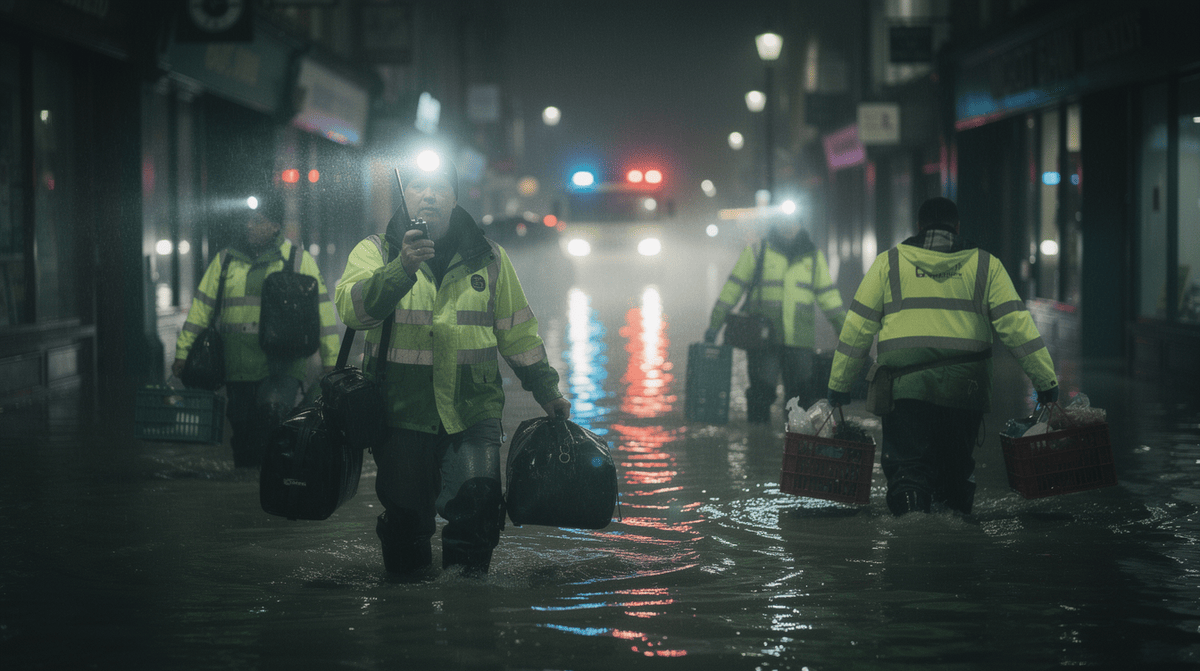
Useful on a wet Tuesday night in a flood, and useful in a national security incident, with the same people, the same training and the same kit.
Project Sentinel is a proposal to reactivate a modernised Royal Observer Corps as a nationally distributed, dual-use auxiliary service under RAF command. Its units would be trained and equipped to deliver practical tasks in support of both military operations and civil contingencies. The work is deliberately simple, disciplined and available, that is where its value comes from.
Trained volunteers would deliver ground-truth reporting, assist during major incidents and extreme weather events, support drone detection and localisation, and provide logistic and first-aid assistance when required. The concept requires no new bureaucracy and builds directly on existing volunteer networks such as the Royal Observer Corps Association.
Core tasks
Project Sentinel should be useful on a wet Tuesday night during a flood as readily as during a defence incident. The list below is deliberately plain: nothing here requires heroics, only training, discipline and presence.
- Ground-truth reporting and cueing when national communications or technical sensors are degraded or overwhelmed.
- Support to major incidents, flooding and extreme weather, welfare, logistics and rest-centre management.
- Spotting, reporting and helping to locate unauthorised drone activity, especially around prisons, critical infrastructure and the border.
- Advanced first aid, triage and casualty evacuation, including blast and crush-injury management.
- Logistic and administrative assistance to Category 1 and 2 responders.
Two jobs, one organisation
The same people, training and equipment serve both defence and civil resilience. That keeps the structure lean and makes the training pay off in ordinary emergencies as well as national-security events. A skill learned for a flood is a skill ready for an incident, and the other way round.
The kit behind the people
Technology should serve the observer network, not replace it. Trailer-based Mobile Command Centres with winched aerostats give long range and persistent top-down coverage; investigation drones, including paired “marauding” observers, give real-time confirmation on the ground.
But the core capability is always the trained person making a disciplined report. Everything else exists to give that person reach, structure and reliable communications.
The effect it delivers
- Persistent coverage of the low sky, below the thresholds national radar is built for.
- Rapid, agile response to low-altitude drone and swarm activity.
- Deterrence and resilience against cheap, distributed, attritable attacks.
- Dual-use value for civil resilience: floods, extreme weather, degraded infrastructure, rest centres, triage and logistics.
The Ask
A capability Britain can stand up before the next crisis, not after it.
Project Sentinel needs no new department, no new headquarters, no blank cheque. It needs a decision to fund a pilot. Get in touch, share it with anyone who can take it forward, and help move the proposal from paper to a working capability.